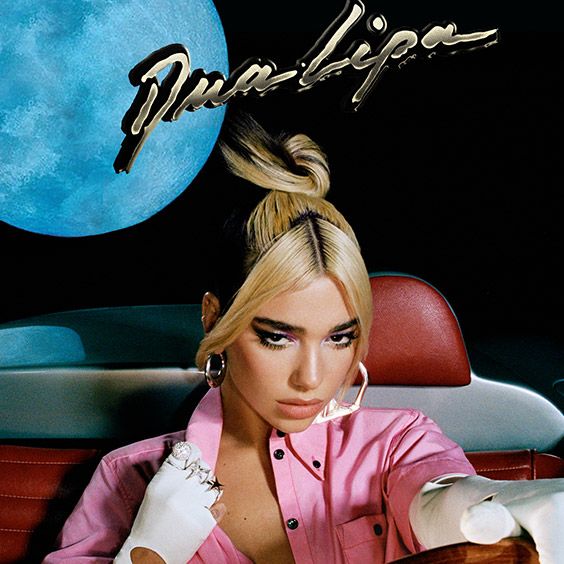
Dua Lipa
Sorry, there are currently no events for Dua Lipa.
Find More EventsAbout Dua Lipa
“This whole album is me, who I am and how I want to be seen as an artist,” says Dua Lipa. “I want people to really get to know me, so the album is everything that has happened in my life so far, and every song tells a different story.”
She may be young, but Lipa has plenty of stories to tell. The London-born child of Kosovar parents, she has already been nominated for awards by the BBC and MTV Europe, and was a finalist for the prestigious “Critics’ Choice” prize at the Brit Awards. She also won Best New Artist at the NME Awards, and two European Border Breakers Awards—she was one of only ten global recipients of the EBBA—including the night’s biggest prize, the “Public Choice” award, voted on by fans.
Her strong presence onstage (indicated by her European Festival Award for Best Newcomer of the Year) immediately separates her from so many emerging pop acts. But with 3.5 million in global sales, it’s her singles that have rapidly established her as a rising star—"Be the One" reached the Top Ten in a dozen European territories, "Hotter Than Hell" hit the Top Twenty in the UK, and “Blow Your Mind (Mwah)” climbed into Billboard’s Top 25 in the US. All of this, mind you, before putting out her first album.
Now, with the release of Dua Lipa, she reveals the full range of her ambitions—not just the dance-floor fire of her singles, but also a more introspective side. “I’ve been describing it as ‘dark pop’ because people have only heard the pop moments, but there are some really dark, singer-songwriter parts that I’m excited about,” she says.
Before Lipa was born, her father was a pop star in his native Kosovo; growing up, she absorbed the music of his favorite artists—Radiohead, Oasis, Stereophonics, Sting. Meanwhile, she was still a regular pop-obsessed kid, singing along to Destiny’s Child and S Club 7 (“stuff that you’d listen with your friends”) and especially Nelly and Pink. Those singers stood out, she says, for their “coolness and honesty—it was pop music, but there was something real about it.”
She attended the Sylvia Young Theater School until she was 11, when she and her family moved back to Kosovo, a country which she considers much more complex than its war-torn image. “Kosovo is changing and evolving so much,” she says. “It’s still very poor, there’s lot of places that are really run-down, but every time I go back there’s something new and better happening. There’s so much talent there, and people are starting to find out about it.”
Encouraged by a teacher who would make her perform Alicia Keys and Toni Braxton hits in school, Lipa began to think about singing—which had always been her “playground dream”—more seriously, and convinced her parents to let her move back to London when she was 15. Living with friends, she made it through high school, but failed her first year of A Levels as partying took priority over attendance.
Too ashamed to tell her friends (“I felt so bad, I just wanted to cover it up”), Lipa applied the same tenacity that has propelled her career ever since: She found an intensive one-year study program, got straight As, and was accepted into four universities. Though she wanted to prove that she could meet these academic challenges, her commitment to her music and her vision never wavered.
“I always told myself never to have a plan B - I feel like that's also one of the reasons I'm doing what I'm doing now, because I have never thought about doing anything else.”
Lipa was working in a restaurant, recording covers and posting them on social media, trying to find a way into the music business, when she was noticed on the street by a modeling agency. “Some of my friends were doing it,” she says. “But I was never put up for any good jobs, just random salons and whatever. And they said ‘If you want to do this properly, you need to lose a lot of weight.’ I tried to do it at first, but it made me very unhappy and caused me a lot of issues, a lot of body confidence problems. Modeling sounds so glamorous, but it really wasn’t a successful thing for me.”
"Every woman should have the privilege to love their body and feel sexy just the way they are,” she continues. “Being able to spread that message and to support all my girls who need to be told they’re fucking hot and that they don’t need to change for anyone inspires me and makes me feel I am exactly where I need to be.”
One thing the agency did accomplish, though, was securing Lipa an audition for a commercial for The X Factor—and when her voice appeared in the ad, she eventually drew the attention of a management team working with Lana Del Rey. She signed a deal that allowed her to quit the restaurant and go from working on demos in her spare moments to focusing on recording.
“I always had a really clear idea of what I liked and what I didn’t, which made the process easier,” she says. During her years in Kosovo, she became a huge hip-hop fan; a Method Man/Redman show was her first concert. “I wanted to bring in my love for hip-hop and find some middle ground,’ she says. “Lyrically, the songs have more of a flow—especially ‘Bad Together’ and ‘Last Dance,’ where it’s really fast-paced, like I’m singing a rap but I have a pop chorus. That was always the goal.”
Lipa says that “Hotter Than Hell,” written before she got signed, was the first time she felt in command of her songwriting, but points to “Garden of Eden” as a turning point. “It kind of wrote itself,” she says. “All I had to do was set it off and be open and honest, and the story just happened.”
While recording Dua Lipa in New York, Los Angeles, Toronto, and London, she was rapidly learning the fearlessness and confidence necessary to write great songs. She says that more personal songs like “Genesis” and “No Goodbyes” indicate where her life is right now.
Lipa recently concluded her first tour, opening for Troye Sivan in the US and headlining dates of her own in the UK. Other than a brief panic attack during her very first show (“luckily people found it endearing, but I was terrified,” she says), performing live quickly became comfortable territory. “I can really be creative and let loose onstage,” she says. “Be really free, just go for it and enjoy it, and get lost in what I’m doing.” The critics instantly took notice: NPR said that she “hypnotized” on stage, while Idolator called her “completely badass” and SPIN raved “she’s headliner material—catch her while you can.”
Perhaps the most emotional experience in Dua Lipa’s young career was her triumphant return to Kosovo for a concert last summer. The appearance drew an astonishing 18,000 fans, and the singer needed a police escort to get from her family’s residence to the venue. “It was the craziest moment of my life,” she says. “Just so insane and so much fun.”
She used the proceeds from the homecoming show to create the Sunny Hill Foundation, named for the neighborhood where her parents reside. “We’re going to give to different charities every month for the youth of Kosovo,” she says. “I just want to do my part, because they’ve done so much for me there.”
This kind of hands-on involvement carries over to Lipa’s relationship with her fans, including close communication on social media and collaborations with her followers on merchandise design. A small group of dedicated Twitter followers rapidly grew into a community too big to keep up with as much as she would like. “We talk about all kinds of things on Twitter, though it’s getting harder now to reply to everything,” she says. “They can tell my moods from my tweets—they ask if I’m feeling OK.
The songs on Dua Lipa announce the arrival of a new force in pop—irresistible on the dance floor, thoughtful under closer inspection, constantly discovering creative possibilities. “I’ve grown a lot as a writer,” Lipa says. “It used to take me a really long time to write a song, but now it’s easier to be more open and say what I’m thinking without having to filter or hide from the people I’m in the room with. Just learning who I am and being able to tell a story.”
Dua Lipa
London-born Dua Lipa has been in the music industry since she was just 15 years old. She got her start singing on YouTube and is now a Grammy Award-winning artist.1
Dua Lipa is known for her distinctive vocals and disco-pop tunes. Her music you can sing along to — whether you're driving to work or in the club on a Saturday night. One of Dua Lipa's biggest hits was Dance the Night, which appeared in the Barbie movie.2 You may also be familiar with Houdini, the Cold Heart remix with Elton John, and Levitating.
Want to experience her music live in a packed stadium? Score Dua Lipa tickets now on AXS and get set for a night of fun, glitter, and toe-tapping beats.
Dua Lipa Background
Singer, actress, and model Dua Lipa has worked diligently to achieve her success. While she was born in the UK, her family returned to their home of Kosovo when she was 11. After a few years, she came back to London by herself — despite being just 15 years old.1
The up-and-coming singer took advantage of modern tech and built a following on YouTube and Soundcloud. After appearing in an ad for the X-Factor, she got her big break. Shortly after, she signed a contract with Warner Records and released her debut single, New Love.3
Her popularity has continued to grow. She has over 60 million monthly listeners on Spotify, and has collaborated with other famous names, including Miley Cyrus and Calvin Harris.3,4
Dua Lipa's Awards
Dua Lipa is an award-winning artist with a long list of achievements. Here are a few standouts:
- Grammy Awards: Dua Lipa was awarded Best Pop Vocal Album in 2021 for the album Future Nostalgia at the 63rd Grammy Awards.2
- Brit Awards: Dua Lipa got a double header with British Female Solo Artist and British Breakthrough Act in 2018. The singles New Rules and IDGAF were also high on the charts.5
- MTV Video Music Awards (VMA): It was the dance moves in the Houdini video that saw Dua Lipa take home Best Choreography in 2024.6
Dua Lipa's Biggest Hits
Some of the top Dua Lipa albums to hit the charts include Dua Lipa (2017), Future Nostalgia (2020), and Radical Optimism (2024).7
The star's biggest singles include:
- Levitating: In 2020, this single reached number 2 on the Billboard Hot 100 and stayed on the charts for 77 weeks.7
- Cold Heart (PNAU remix): This collaboration with Elton John had the top spot for Digital Song Sales for 2 weeks. It spent 64 weeks on the chart.7
- One Kiss: This Dua Lipa and Calvin Harris collab was the top Dance Club Song for a week in 2018. The hit stayed on the charts for 22 weeks.7
See Dua Lipa Live
A Dua Lipa live concert will be an event you won't forget. With high energy, pyrotechnics, and choreographed dance moves, the singer knows how to put on a show. You'll hear all the hits in a packed out stadium, and if you're lucky — she may even throw in a cover song or two.8
Dua Lipa is currently performing at locations across the globe. Score tickets to the Radical Optimism tour at AXS.
Sources:
- Dua Lipa - Biography, Albums, Songs, Barbie, Levitating, & Facts - Britannica
- Dua Lipa - Artist - Grammy
- Everything you need to know about Dua Lipa's incredible career so far - Rayo
- Dua Lipa - Spotify
- Dua Lipa wins two BRIT awards and Steve Mac wins Best British Producer - Universal Music Publishing Group
- Dua Lipa - Awards - IMDb
- Dua Lipa - Biography, Music & News - Billboard
- Dua Lipa Stakes Claim as Hardest Working Person in Showbiz at Melbourne Show - Rolling Stone Australia
- Dua Lipa dreams of being like Nelly Furtado - Glamcult
- Concert Review: Dua Lipa - Headliner Chicago